


“As an Amazon Associate I earn from qualifying purchases.” .
Ticks are more than just annoying little pests. They can carry serious illnesses like Lyme Disease, Rocky Mountain spotted fever, and other infections that affect both people and pets. If you enjoy hiking, fishing, camping, gardening, or spending time outdoors, learning how to repel ticks naturally can help reduce your risk.
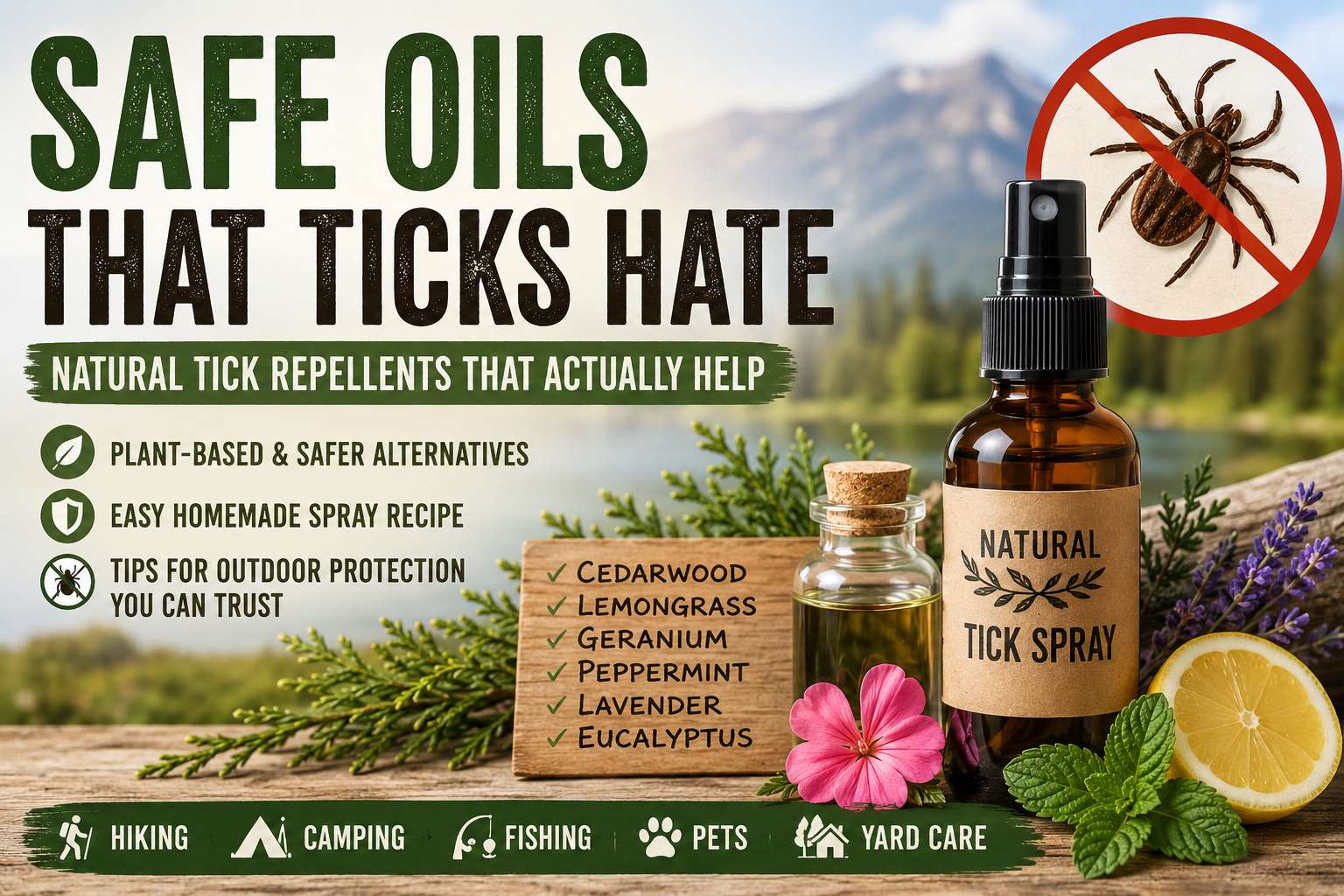
Many people are searching for safer alternatives to chemical sprays, and certain essential oils have become popular natural tick repellents. While no natural oil offers perfect protection, some scents are known to make ticks avoid treated areas.
Why Ticks Hate Certain Essential Oils
Ticks locate hosts through body heat, carbon dioxide, and scent. Strong-smelling plant oils can interfere with their ability to detect humans and animals. Some oils may also irritate ticks or make surfaces less appealing for them to crawl onto.
Natural oils are commonly used in homemade sprays for clothing, boots, backpacks, tents, and outdoor gear.
Best Essential Oils for Repelling Ticks
Cedarwood Oil
Cedarwood oil is one of the most popular natural tick repellents. It has a strong woodsy scent that many insects dislike. Some people also use cedar chips around yards and campsites to help discourage pests.
Best uses:
- Boots and socks
- Outdoor clothing
- Camping gear
- Yard sprays
Lemongrass Oil
Lemongrass contains compounds that produce a sharp citrus smell ticks tend to avoid. It is commonly added to homemade outdoor sprays.
Benefits:
- Fresh scent
- Easy to blend with other oils
- Popular in mosquito and tick repellents
Geranium Oil
Rose geranium oil is often mentioned in natural tick prevention studies and outdoor communities. Many hikers and campers use it in DIY repellents.
Popular uses:
- Mixed into sprays
- Applied to clothing
- Added to outdoor wipes
Peppermint Oil
Peppermint oil has a strong cooling smell that many bugs dislike. It is commonly combined with cedarwood or lemongrass for a stronger scent blend.
Lavender Oil
Lavender is known for its calming scent to humans, but many insects dislike it. It is often used in natural outdoor products because it smells pleasant while still helping repel pests.
Eucalyptus Oil
Lemon eucalyptus oil is one of the better-known plant-based insect repellents. Some commercial natural bug sprays use it as an active ingredient.
Easy Homemade Natural Tick Spray
You can make a simple DIY tick repellent spray at home using essential oils.
Ingredients
- 1 cup water
- 1 tablespoon witch hazel or vodka
- 15–20 drops essential oils
Suggested Blend
- 10 drops cedarwood oil
- 5 drops lemongrass oil
- 5 drops geranium oil
Shake well before each use.
How to Use It
Spray lightly on:
- Boots
- Pants
- Socks
- Backpacks
- Fishing gear
- Camping equipment
Avoid spraying directly into eyes or on sensitive skin.
Are Natural Tick Repellents Enough?

Natural oils can help reduce tick activity, but they are usually not as long-lasting or powerful as professional repellents.
If you spend time in heavy tick areas, experts often recommend combining natural methods with stronger protection like:
- Permethrin for clothing and gear
- Picaridin for skin
- DEET for maximum protection
Tick Prevention Tips That Actually Work
Even the best spray works better when combined with smart outdoor habits.
Wear Protective Clothing
- Long pants
- Tall socks
- Light-colored clothing so ticks are easier to see
Stay Out of Tall Grass
Ticks often wait on weeds and brush for animals or people to pass by.
Do Tick Checks After Being Outside
Check:
- Legs
- Waistline
- Behind knees
- Neck
- Hairline
Check Pets Too
Dogs can easily carry ticks into the house after walks or hikes.
Final Thoughts
Natural oils like cedarwood, lemongrass, peppermint, lavender, and geranium may help repel ticks while offering a safer alternative to harsh chemicals for some people. They work best as part of a complete tick prevention plan that includes proper clothing, outdoor awareness, and regular tick checks.
For outdoor lovers, hikers, campers, anglers, and gardeners, a good natural tick spray can become an easy part of staying safer outside.
“As an Amazon Associate I earn from qualifying purchases.” .
