


“As an Amazon Associate I earn from qualifying purchases.” .
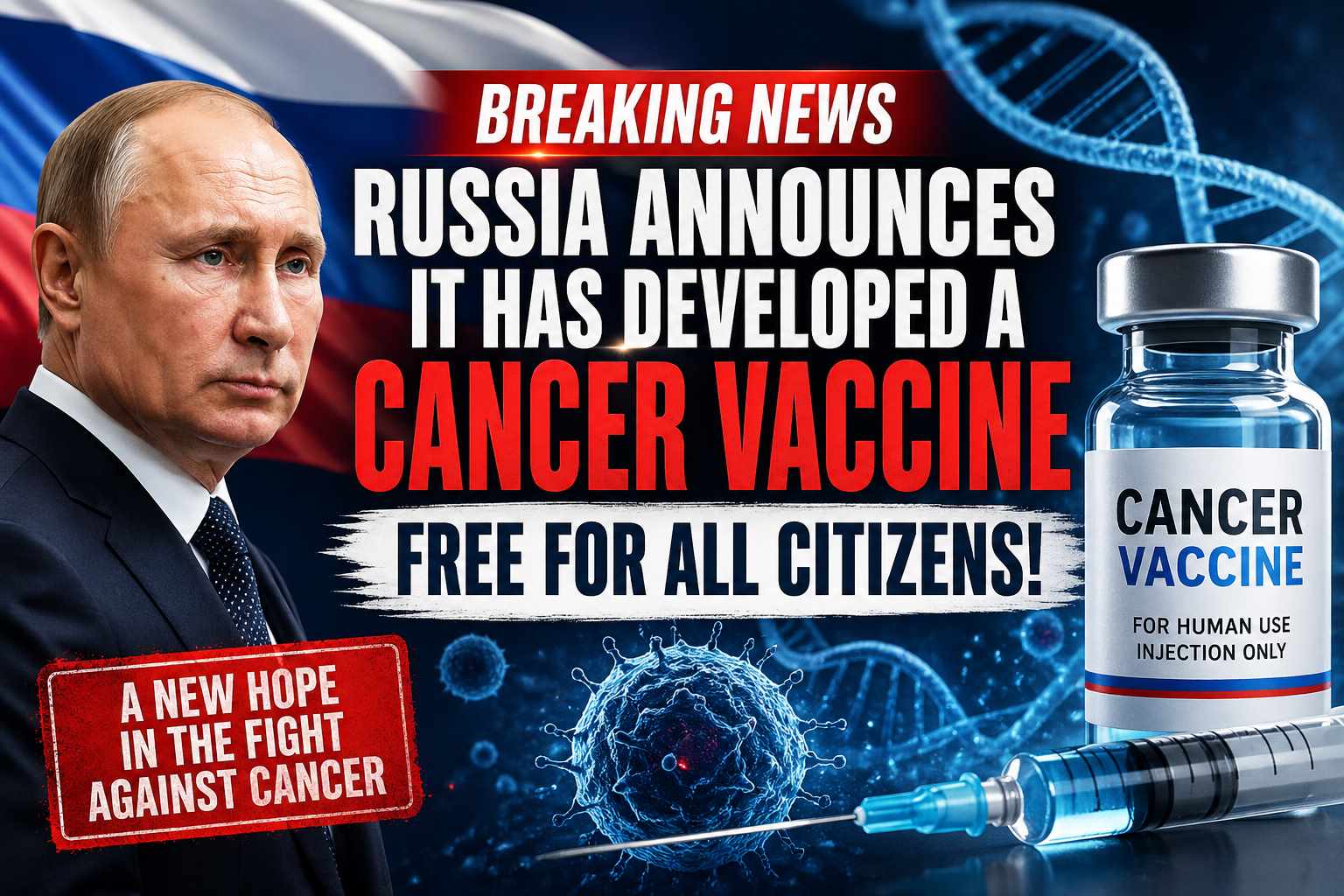
A recent announcement from Russia has sparked global attention, with officials claiming the development of a new cancer vaccine that could significantly impact how the disease is treated. According to early reports, the vaccine may help slow tumor growth and, in some cases, reduce tumor size.
While details remain limited, the announcement has generated both excitement and skepticism across the medical community.
A Promising but Unverified Development
Russian officials stated that the vaccine is designed to work through advanced immunotherapy—training the body’s immune system to recognize and attack cancer cells more effectively.
Immunotherapy itself is not new. In recent years, it has become one of the most promising areas of cancer treatment. However, a vaccine capable of broadly targeting cancer would represent a major leap forward.
At this stage, there is no widely published, peer-reviewed data confirming the effectiveness or safety of this specific vaccine. As with any major medical claim, independent verification will be critical.
Reported Benefits
According to initial statements, the vaccine may:
- Slow tumor progression
- Reduce tumor size significantly
- Offer a more targeted approach than traditional treatments
If proven accurate, these outcomes could complement or potentially reduce the need for treatments like chemotherapy and radiation.
Free Distribution Raises Global Interest
One of the most notable aspects of the announcement is Russia’s claim that the vaccine will be made available free of charge to its citizens.
In a world where cancer treatment can be extremely expensive, this approach has drawn attention internationally. It raises broader questions about healthcare accessibility and how new treatments might be distributed in the future.
The Role of Immunotherapy
The science behind the vaccine is said to rely on immunotherapy principles. Instead of attacking cancer directly, immunotherapy works by strengthening the body’s natural defenses.
This approach is already used in certain cancer treatments today, but developing a widely effective “vaccine-style” solution remains a major challenge in modern medicine.
Global Impact and Questions Ahead
If the vaccine proves effective through clinical trials and independent research, it could have major implications:
- A shift in how cancer is treated worldwide
- Increased focus on immune-based therapies
- Pressure on healthcare systems to improve affordability
However, there are still key questions:
- Has the vaccine undergone large-scale clinical trials?
- What types of cancer does it target?
- How effective is it across different patients?
- Will other countries adopt or validate the treatment?
What Happens Next?
Before this can be considered a true breakthrough, several steps are necessary:
- Independent scientific validation
- Published clinical trial data
- Regulatory review and approval
- Scalable production and distribution
Until then, the announcement should be viewed as promising but unconfirmed.
Final Thoughts
The idea of a cancer vaccine is one of the most sought-after goals in medicine. Russia’s announcement adds to ongoing global efforts to find more effective and accessible treatments.
While it’s too early to draw conclusions, this development highlights the rapid pace of innovation in cancer research—and the hope that better solutions may be on the horizon.
“As an Amazon Associate I earn from qualifying purchases.” .
